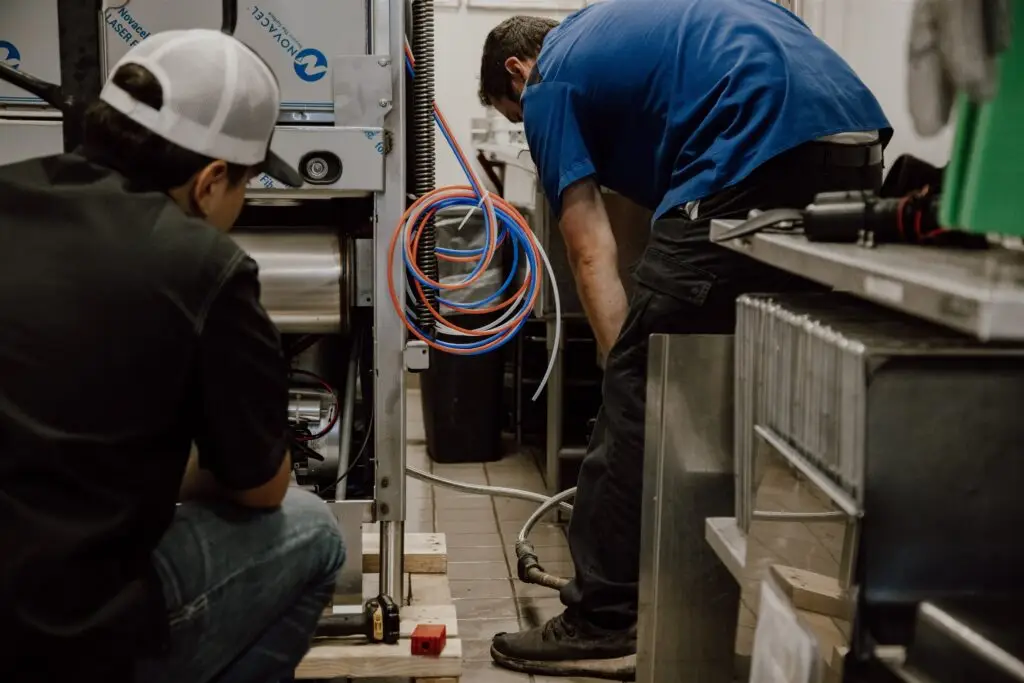
A commercial kitchen puts its equipment through conditions that would be extreme almost anywhere else. Refrigerators run around the clock. Fryers operate for hours at high temperatures. Ovens, ranges, dishwashers, ice machines, exhaust systems, and HVAC equipment may all be running simultaneously through lunch and dinner service.
When maintenance gets pushed aside, small problems can turn into equipment failures at the worst possible time.
The good news is that not every maintenance task requires a service technician. Restaurant staff can handle many basic inspections and cleaning tasks in between professional preventative maintenance visits.
Use this commercial kitchen equipment maintenance checklist to build a routine for your restaurant, hotel, school, healthcare facility, brewery, cafeteria, or other commercial foodservice operation.
Why Commercial Kitchen Preventative Maintenance Matters
Most equipment problems don’t begin with a complete shutdown.
They often start with smaller warning signs:
- A cooler taking longer to reach temperature
- A refrigerator door that no longer seals tightly
- A fryer that heats inconsistently
- A burner flame that looks different than usual
- An oven taking longer to preheat
- An ice machine producing less ice
- An unusual vibration or noise
- Water appearing somewhere it shouldn’t
- A dishwasher that isn’t cleaning as effectively as before
Catching these problems early gives you an opportunity to correct them before they interrupt service.
A consistent maintenance schedule can also help you:
- Reduce unexpected equipment downtime
- Catch developing problems earlier
- Protect refrigerated inventory
- Keep cooking equipment performing consistently
- Maintain a cleaner kitchen
- Extend the useful life of expensive equipment
- Create a documented maintenance history
- Plan repairs instead of reacting to emergencies
The key is separating routine operator maintenance from work that should be performed by a qualified commercial kitchen equipment technician.
Daily Commercial Kitchen Maintenance Checklist
Daily maintenance should focus on cleanliness, operating conditions, temperatures, and obvious warning signs.
These tasks can usually be incorporated into opening and closing procedures.
Refrigeration
At least once per shift:
- Record walk-in cooler and freezer temperatures
- Check reach-in refrigerator temperatures
- Make sure refrigerator and freezer doors close completely
- Look for damaged or loose door gaskets
- Check for unusual frost or ice accumulation
- Listen for unusual fan, compressor, or motor noises
- Check underneath equipment for water or refrigerant-related residue
- Make sure air vents inside refrigeration equipment aren’t blocked by food or containers
Temperature logs are particularly useful because they can reveal a developing problem before the refrigerator stops cooling entirely.
If a cooler normally maintains a consistent temperature but suddenly begins trending warmer over several days, don’t ignore it.
Fryers
At closing:
- Filter or replace fryer oil as required
- Remove food debris
- Wipe accessible exterior surfaces
- Inspect baskets for broken wires or damaged handles
- Check for oil leaks around the fryer
- Note unusually slow heating or temperature fluctuations
Avoid attempting repairs involving gas lines, electrical components, thermostats, high-limit controls, or heating elements yourself.
Ovens, Ranges and Griddles
Staff should:
- Remove grease and food buildup
- Clean cooking surfaces according to manufacturer recommendations
- Inspect burner flames for unusual appearance
- Check knobs and controls for obvious damage
- Watch for delayed ignition
- Note temperature inconsistencies
- Report unusually long preheat times
A change in equipment performance is often more important than whether the equipment is still technically operating.
Dishwashers
At the end of each shift:
- Clean removable screens and strainers
- Remove food debris
- Check wash and rinse arms for blockage
- Inspect the machine for leaks
- Make sure doors and latches close correctly
- Check chemical levels where applicable
- Note changes in wash quality or cycle performance
Ice Machines
Ice is food, so keeping the surrounding area clean matters.
Staff should:
- Keep the exterior and surrounding area clean
- Make sure the ice scoop is stored properly
- Check for unusual odors
- Watch for reduced ice production
- Look for water leaks
- Report cloudy, oddly shaped, or inconsistent ice when it represents a change in normal operation
Internal cleaning and sanitizing procedures should follow the equipment manufacturer’s requirements.
Weekly Commercial Kitchen Maintenance Checklist
Weekly maintenance gives your team an opportunity to look beyond normal closing procedures.
Inspect Door Gaskets and Hinges
Check refrigeration and oven doors for:
- Cracked gaskets
- Loose seals
- Torn rubber
- Doors that don’t align correctly
- Hinges that are beginning to sag
A refrigerator with a poor door seal has to work harder to maintain temperature.
Inspect Equipment for Leaks
Look underneath and behind equipment where safely accessible.
Watch for:
- Water
- Oil
- Grease
- Excess condensation
- Unexplained moisture
Never ignore a leak simply because the equipment is still running.
Check Equipment Clearances
Commercial refrigeration and cooking equipment need adequate airflow.
Make sure employees haven’t stacked boxes, containers, paper products, or other supplies against ventilation openings or mechanical compartments.
Listen to Your Equipment
Your staff works around the equipment every day and often notices changes before anyone else.
Grinding, buzzing, squealing, rattling, clicking, or excessive vibration can indicate a developing mechanical problem.
Create a simple procedure for employees to report equipment that suddenly sounds different.
Monthly Commercial Kitchen Maintenance Checklist
Monthly inspections should go a little deeper.
Assign these tasks to a manager or experienced employee so they don’t get skipped during busy service periods.
Review Your Temperature Logs
Don’t just collect refrigeration temperature logs—review them.
Look for:
- Gradual temperature increases
- Large temperature swings
- Equipment requiring repeated adjustments
- Recurring problems during specific times of day
Patterns can provide valuable information when a technician eventually diagnoses the equipment.
Check Refrigeration Condenser Areas
Dust, grease, pet hair, cardboard fibers, and kitchen debris can accumulate around refrigeration systems.
Visually inspect accessible condenser areas and make sure airflow isn’t obstructed.
Cleaning procedures vary by equipment. If you’re unsure how to access or clean a condenser safely, have a commercial refrigeration technician handle it.
Inspect Electrical Cords and Plugs
Look for obvious external damage such as:
- Frayed cords
- Loose plugs
- Burn marks
- Cracked insulation
Damaged electrical equipment should be removed from service and evaluated by a qualified professional.
Check Casters, Feet and Equipment Stability
Commercial kitchen equipment moves more than many operators realize.
Inspect:
- Casters
- Adjustable feet
- Equipment leveling
- Mounting points
- Loose handles
- Door hardware
A small mechanical problem is usually much easier to correct before something breaks completely.
Review Your Repair History
Monthly maintenance isn’t only about physically inspecting equipment.
Look at your recent service calls.
If the same refrigerator, fryer, oven, dishwasher, or ice machine has required multiple repairs, it may need a more thorough evaluation.
Recurring repairs can indicate an underlying problem that hasn’t been addressed.
Quarterly Commercial Kitchen Maintenance Checklist
Quarterly maintenance is where professional preventative maintenance becomes especially valuable.
A qualified commercial kitchen service technician can inspect systems and components restaurant staff shouldn’t attempt to service.
Depending on the equipment, a professional PM visit may include:
Commercial Refrigeration
- Condenser and evaporator inspection
- Coil cleaning where required
- Fan motor inspection
- Temperature calibration
- Door gasket inspection
- Drain inspection and cleaning
- Electrical component inspection
- Refrigerant system evaluation when needed
Refrigeration problems should be addressed early. A failed walk-in cooler can quickly turn an equipment problem into an inventory and food-safety problem.
Cooking Equipment
Professional maintenance may include:
- Burner inspection and cleaning
- Pilot and ignition system testing
- Thermostat calibration
- Safety-control testing
- Electrical connection inspection
- Door, hinge, and seal inspection
- Heating-performance checks
Commercial cooking equipment combines high temperatures with gas and/or high-voltage electrical systems, making professional inspection particularly important.
Warewashing Equipment
A technician can evaluate:
- Pumps
- Heating components
- Controls
- Wash and rinse performance
- Seals
- Water connections
- Electrical components
Commercial HVAC and Make-Up Air
Your kitchen equipment doesn’t operate independently of the building.
Exhaust hoods remove large volumes of air, while make-up air and HVAC systems help maintain proper building pressure and temperature.
Problems with these systems can affect kitchen comfort and, in some cases, the performance of gas-fired cooking equipment.
Professional HVAC maintenance may include filters, belts, coils, motors, controls, refrigeration components, and make-up air equipment.
What Restaurant Staff Should NOT Attempt to Repair
There is an important difference between maintenance and repair.
Cleaning equipment and identifying problems is helpful.
Taking apart gas, electrical, refrigeration, or safety systems without the proper training can create a much bigger problem.
Call a qualified commercial kitchen technician when a problem involves:
- Refrigerant systems
- Gas valves or gas lines
- Electrical components
- Compressors
- Motors
- Ignition systems
- Thermostats or temperature controls
- High-limit safety controls
- Heating elements
- Water pumps
- Commercial HVAC systems
- Equipment that repeatedly trips a breaker
- Any condition that could create a fire, electrical, gas, or food-safety hazard
When in doubt, stop using the equipment and have it inspected.
Don’t Wait Until Equipment Completely Fails
One of the most common maintenance mistakes is waiting for a piece of equipment to stop working before calling for service.
Instead, pay attention to changes in performance.
Schedule an inspection when you notice:
- Refrigeration temperatures becoming inconsistent
- Longer heating or cooling times
- Unusual noises
- Water or oil leaks
- Excessive frost
- Equipment repeatedly shutting off
- Burners failing to ignite normally
- Reduced ice production
- Unusual odors
- Repeated error codes
- Increasingly frequent repair calls
A piece of equipment that’s still operating can still be telling you something is wrong.
Build a Maintenance Schedule for Your Entire Kitchen
The easiest way to stay ahead of commercial kitchen equipment problems is to create a documented system.
Your maintenance schedule should identify:
Daily tasks: completed by kitchen staff
Weekly tasks: completed by shift leaders or managers
Monthly inspections: completed by management
Professional preventative maintenance: completed on an appropriate schedule by qualified technicians
High-volume kitchens and facilities with large equipment inventories may benefit from more frequent professional service than smaller operations.
The right schedule depends on your equipment, hours of operation, age of the units, kitchen volume, and operating environment.
Commercial Kitchen Preventative Maintenance in Colorado
Restaurant managers already have enough to keep track of.
If your team is constantly reacting to refrigeration failures, cooking equipment problems, HVAC issues, or emergency repair calls, it may be time to move from reactive maintenance to a scheduled preventative maintenance program.
Maintenance Chef provides commercial kitchen preventative maintenance across Colorado’s Front Range, including Metro Denver and Colorado Springs.
A professional maintenance program can put your kitchen equipment on a regular inspection schedule while giving your management team a clearer picture of what needs attention before it becomes an emergency.
Need help maintaining your commercial kitchen equipment? Contact Maintenance Chef to discuss a preventative maintenance plan for your facility.
Commercial Kitchen Maintenance FAQs
How often should commercial kitchen equipment be professionally serviced?
There isn’t one schedule that fits every kitchen. Equipment type, usage, age, operating hours, and environment all matter. High-volume restaurants may require more frequent maintenance than lower-volume facilities. A commercial kitchen technician can help determine an appropriate schedule for each piece of equipment.
What commercial kitchen equipment needs preventative maintenance?
Virtually every major system benefits from regular maintenance, including commercial refrigerators, walk-in coolers and freezers, ovens, ranges, fryers, griddles, dishwashers, ice machines, beverage equipment, HVAC systems, and make-up air units.
Can restaurant employees perform preventative maintenance?
Employees can handle many routine tasks such as cleaning, temperature monitoring, visual inspections, checking door seals, and identifying changes in equipment performance. Gas, electrical, refrigeration, HVAC, and internal mechanical repairs should be left to properly qualified technicians.
What are the signs commercial kitchen equipment needs service?
Common warning signs include temperature fluctuations, unusual noises, leaks, longer heat-up or cool-down times, reduced output, repeated error codes, unusual odors, ignition problems, and equipment that begins cycling or shutting down unexpectedly.
Is a preventative maintenance contract worth it?
For many commercial kitchens, scheduled maintenance provides a more predictable way to manage equipment than waiting for failures. It allows potential problems to be identified during planned visits instead of during a dinner rush, overnight, or when refrigerated inventory is at risk.